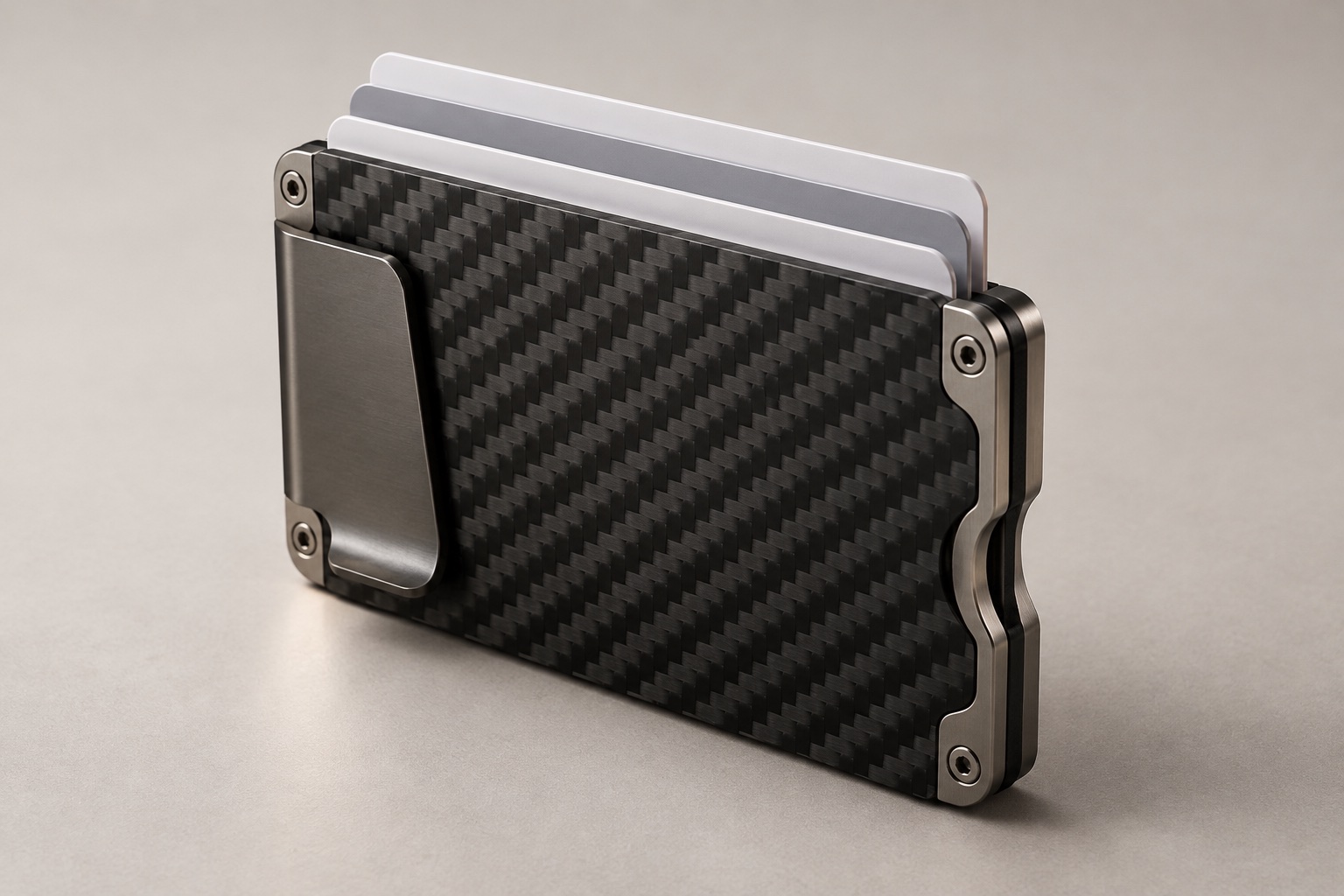
A polished sample can help a founder explain a product idea, but it does not answer every launch question. For a carbon fiber wallet, separate everyday use, appearance and manufacturing readiness. This editorial checklist helps you decide what to learn from the first sample before committing to packaging, inventory or production tooling.
1. Start with a real carrying scenario
Define what the wallet should hold and how someone will use it. Bring representative cards, notes and any proposed clip or strap to the review. Check insertion, removal, retention and access with both a lightly loaded and the intended fully loaded wallet. Record your chosen capacity instead of leaving it as an assumption.
Ask reviewers to handle the edges, corners and hardware, then try the product in the intended pocket or bag. Write down snagging, uncomfortable contact and difficult motions. Agree a repeatable review method and acceptance criteria; an attractive photograph cannot demonstrate comfortable use.
2. Describe the construction behind the appearance
Clarify which pieces are carbon fiber composite and which are metal, polymer, elastic or adhesive. Ask for the proposed panel thickness, edge treatment, assembly method and replaceable parts. Keep the approved construction description with the sample revision so later cost discussions compare the same product.
Hexcel explains that the resin matrix contributes to a composite’s thermal and chemical resistance. Ask the developer to review the intended exposure and cleaning method against the selected materials. A weave pattern does not establish those limits. Avoid promising waterproofing, scratch resistance or RFID protection without a defined, relevant verification.
Hexcel — Prepreg Technology: matrix properties ↗3. Review appearance under agreed conditions
Identify the surfaces that customers will see, the weave direction, gloss level, logo position and acceptable edge appearance. Review the actual sample under agreed lighting and viewing conditions. Record representative acceptable and unacceptable features with photographs, then keep an identified reference sample for comparison.
Include the assembled product in this review. Check visible fasteners, adhesive traces, gaps and alignment. If you plan a wear or handling trial, define the exposure, observations and pass criteria in advance. Keep early user feedback separate from evidence that a production batch meets the agreed specification.
4. Resolve the production route before ordering tooling
Ask whether the proposal uses cut flat panels, molded shells or a combination, and which operations are outsourced. List the required cutting, finishing, assembly and inspection steps. For a molded design, agree the forming process and tooling basis before formal mold design; do not approve a mold solely from a rendering.
Gurit describes precision plugs and quality molds as important to composite accuracy and consistency. Apply that principle by asking how the proposed tooling will reproduce your agreed geometry. Confirm who owns the tools and drawings, and how a design change will be reviewed.
Gurit — Manufacturing Solutions and Tooling ↗5. Set a clear decision for the next batch
End the sample review with a short decision record. Identify what is accepted, what must change and what remains untested. If changes affect materials, edges, hardware or assembly, request a revised sample or targeted check before carrying the earlier approval forward.
Ask for a pilot-batch proposal against the approved revision, with inspection, packaging, quantities and commercial terms stated separately. Keep these three questions visible:
- Can intended users operate it comfortably?
- Does the assembled sample meet the agreed appearance and functional criteria?
- Can the supplier explain how the next batch will match the approved revision?